

Table of Contents
A
| Dance Title | Type | Deviser (or Editor/Publisher), Date, Interpreter | Music Performers | Formation |
|---|---|---|---|---|
| Among the Cheviot Hills |  | John Cahill 2016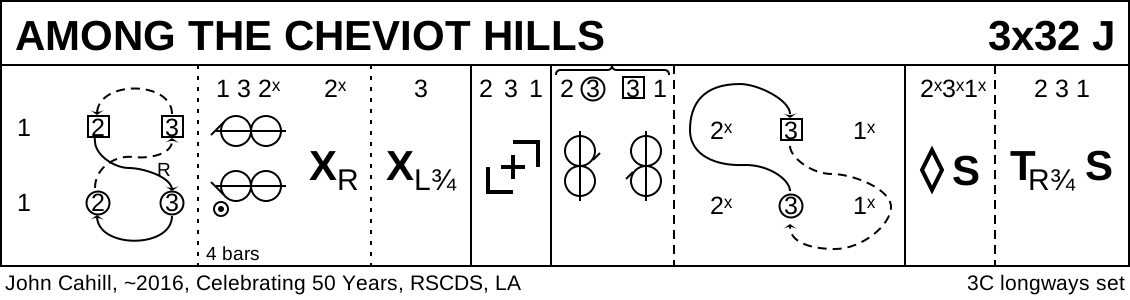
|  | 3 Couple Longways permutation: 231 |
D
| Dance Title | Type | Deviser (or Editor/Publisher), Date, Interpreter | Music Performers | Formation |
|---|---|---|---|---|
| Dandelion in the Green |  | Jenna Simpson 2024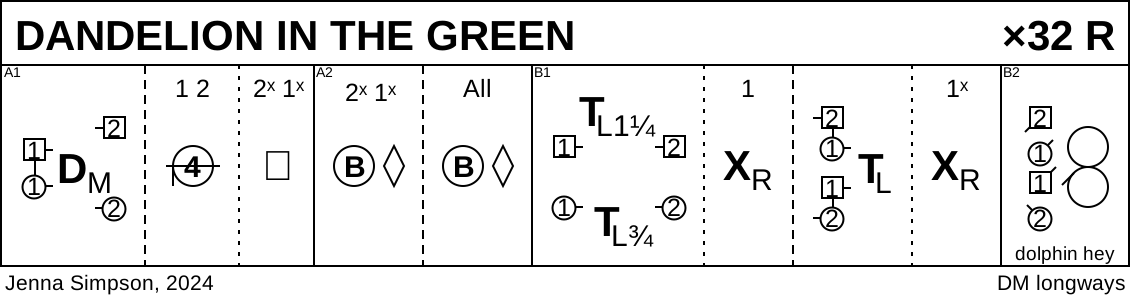
| | Duple Minor |
| Down Under, Hands Up! | | Jon Reeves 2015
| | Triple Minor |
I
| Dance Title | Type | Deviser (or Editor/Publisher), Date, Interpreter | Music Performers | Formation |
|---|---|---|---|---|
| In Mr. McGregor's Garden | | Audrey Ramsay Prest 2016
| | Triple Minor |
J
| Dance Title | Type | Deviser (or Editor/Publisher), Date, Interpreter | Music Performers | Formation |
|---|---|---|---|---|
| J. B. Milne | | Hugh Foss 1954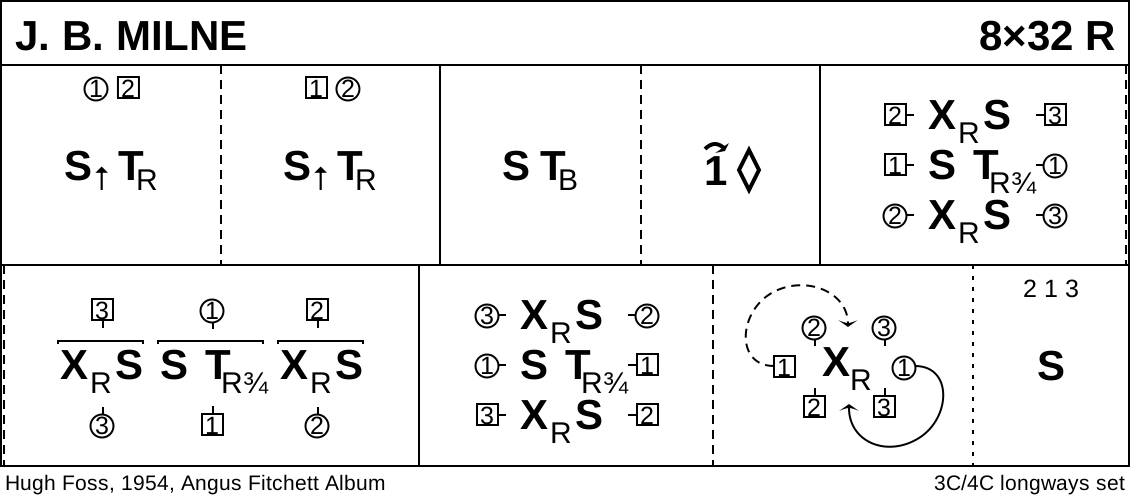
| | Triple Minor |
L
| Dance Title | Type | Deviser (or Editor/Publisher), Date, Interpreter | Music Performers | Formation |
|---|---|---|---|---|
| Longborough Lanterns | | Melissa Shaner 2009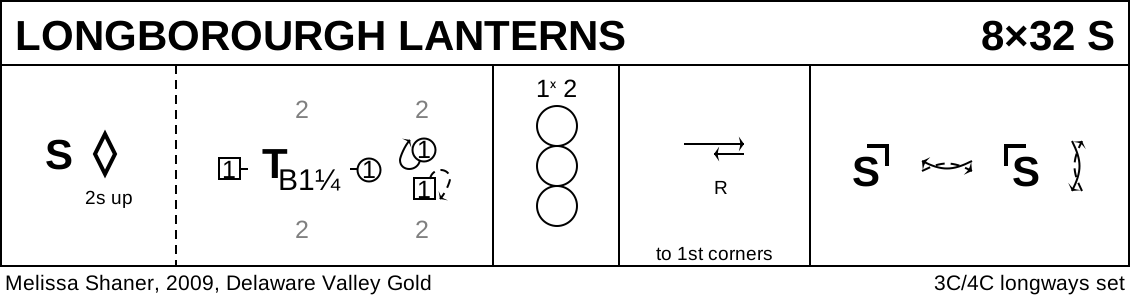
| | Triple Minor |
M
| Dance Title | Type | Deviser (or Editor/Publisher), Date, Interpreter | Music Performers | Formation |
|---|---|---|---|---|
| Mistress Mary | | Anthea Macdonald 2015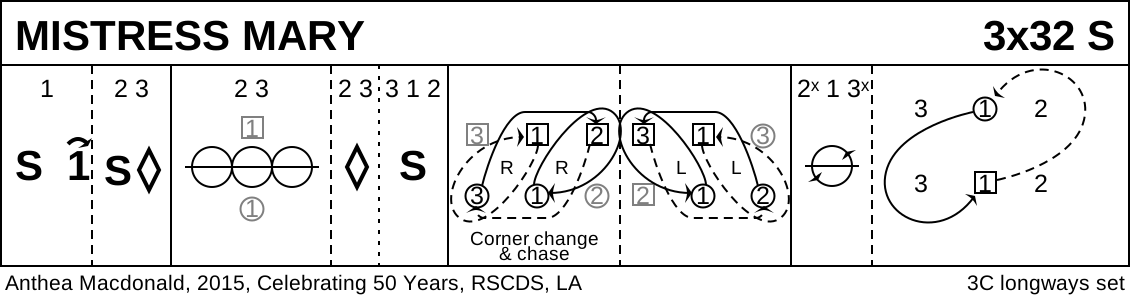
| | 3 Couple Longways permutation: 312 |
P
| Dance Title | Type | Deviser (or Editor/Publisher), Date, Interpreter | Music Performers | Formation | ||||||||||
|---|---|---|---|---|---|---|---|---|---|---|---|---|---|---|
Piper Frap
| ||||||||||||||


R
| Dance Title | Type | Deviser (or Editor/Publisher), Date, Interpreter | Music Performers | Formation |
|---|---|---|---|---|
| Reel Parenting | | Laura Husman 2015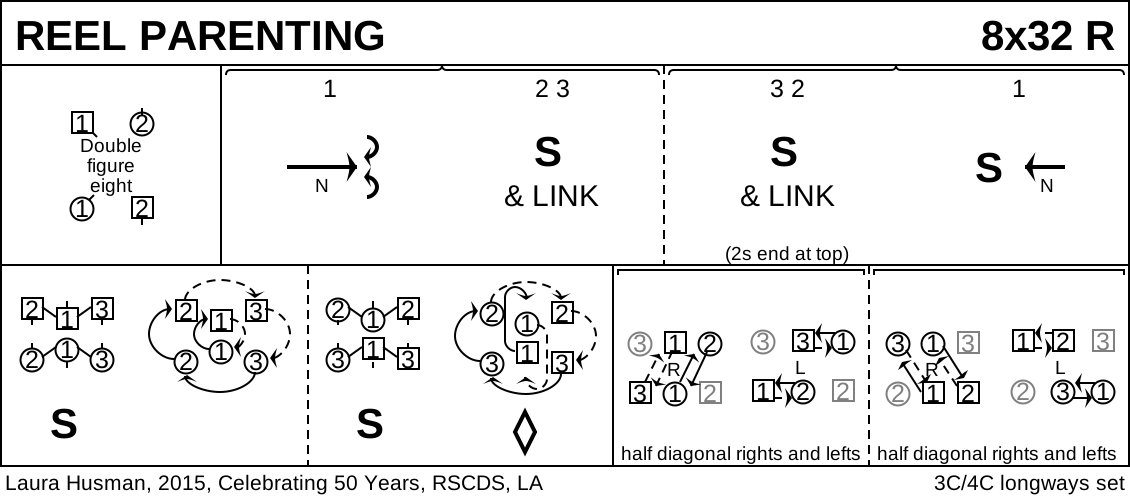
| | Triple Minor |
U
| Dance Title | Type | Deviser (or Editor/Publisher), Date, Interpreter | Music Performers | Formation |
|---|---|---|---|---|
| Under the Influence | | Jenna Simpson 2013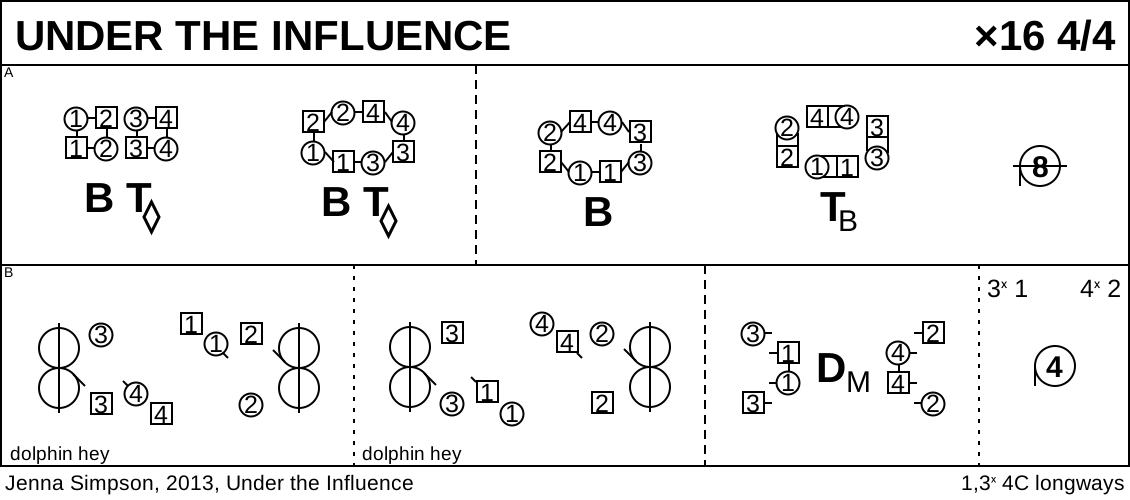
| | 4 Couple Longways permutation: 3142 |
X
| Dance Title | Type | Deviser (or Editor/Publisher), Date, Interpreter | Music Performers | Formation |
|---|---|---|---|---|
| Xs and Os | | Renée Camus 2026
| Choreograffiti Audrey Jaber, Shira Kammen, Chip Prince, and Del Eckels | Duple Minor |
| Number of dances | Number of versions | Number with music |
|---|---|---|
| 11 | 12 | 1 |
Warning: The figures for each dance is generated programmatically by regular expression matching and may be in error. Also, for old dances, they reflect the figures used by the interpreter which may not match those of the deviser.
Petronella Turn
Bars: 2.
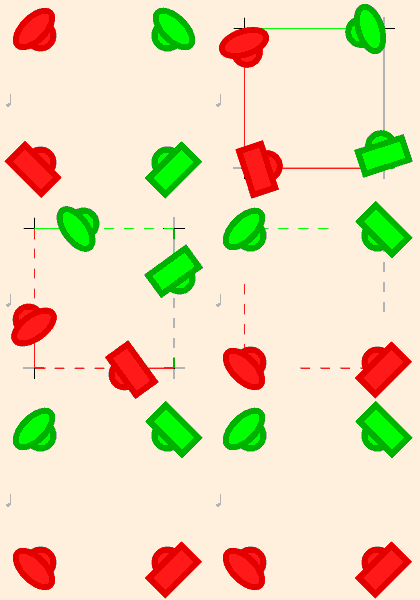
 A Petronella Turn has come to mean two different things, depending on which tradition of dancing you follow. Both come from the same source but evolved differently over time.
In US Contra Dance, a petronella turn means moving one place to the right around the minor set, while spinning over your right shoulder. Usually this takes 1 bar, so the next bar is used up by clapping.
In Scottish Country Dance, the petronella turn is done in pas-de-basque setting. The first step is out to the right and inward, and finishes with the active dancers facing out of the set, on the next bar they pas-de-basque over their right shoulders until they face in.
There is also a petronella figure, which involves 4 petronella turns and setting with the actives returning to places after 16 bars.
In Scottish Country Dance dancers, petronella turn, and set; petronella turn, and set; petronella turn, and set; petronella turn, and set.
But in Contra dance the set comes before the petronella turn, and then became a "balance the ring".
In the US, English Country Dances occasionally borrow the Contra dance version of a petronella turn.
History
The first source for the petronella turn comes from The Ball-Room, or the Juvenile Pupil's Assistant; Containing the Most Fashionable Quadrilles, with Les Lanciers of Sixteen, As Danced in the Public & Private Assemblies in Paris by J. P. Boulogne, published 1827, and he says:
1. The first couple perform the figure of a diamond to their right, setting at the four corners 16
But since he neglects to say exactly how you move to make this diamond figure, the instructions aren't very helpful.
Looking elsewhere, the next earliest description of the figure I have found was published by the Lowes in Lowes' Ball-Conductor and Assembly Guide. of ~1831. The Lowes published in Edinburgh. They describe it thusly:
First couple chassé round to the right, and set in the middle; round to the right again, and set on the sides; to the right again, and set in places
Here the eponymous "Petronella Turn" is spelled out clearly as a chassé, I don't think you can turn while doing a chassé, so this was a much simpler move than it is now.
Also after doing a chassé, the pas-de-Basque setting of the (R)SCDS seems unlikely, the most natural setting would be the step-close-step-close style that English Dancing uses.
By 1853, the Lowes had become just Joseph Lowe, and he published a somewhat different version in his Lowe's Selection of Popular Country Dances:
First couple turn round to the right, and set opposite to each other in the middle of the Dance (4 Bars). Again round to the right, and set on the sides of the Dance, (4 Bars) Again round to the right, and set in the middle, (4 Bars) Again to the right and set in places. (4 Bars) (8 Bars)Courtesy of National Library of Scotland, licensed under:

Here the Petronella turn is no longer a chassé, but has become turn round to the right. I suspect this means just pulling back your right shoulder and turning 270 degrees as you move, since this is way the move is done in the US, and it crossed the Atlantic at about this time.
The first version I've found in the US appears in an anonymous work from New Hampshire in 1858 (where the dance is called Patenella): The Ball Room Guide, A Description of the Most Popular Contra Dances of the Day,:
First couple balance, swing, balance, swing, and so continue four times
This is no help whatsoever on the way the turn was done, but it does show that the set moved before the petronella turn as soon as it crossed the Atlantic.
Then from Boston in Elias Howe's 1868: The Pianist's Matinee: A Collection of Music for the Piano-Forte, writes:
First couple turn round to the right, and balance opposite to each other in the middle of the dance. (4 bars) Again round to the right, and balance on the sides of the dance. (4 bars) Again to the right, and balance in the middle. (4 bars) Again to the right, and balance in places. (4 bars)
This is almost word for word what Joseph Lowe said, except that Howe replaces "set" with "balance".
There are a number of other sources of the dance from Scotland in the latter part of the 19th century, but all the ones I've found read very much like Joseph Lowe's version. Perhaps the way each figure was danced changed in this period, but the words describing them did not.
In 1897 in D. Anderson's Ball-Room and Solo Dance Guide, (Dundee)
Time 2-4Turn to right in centre with two steps facing each other, then set to each other with two steps.Turn into each other's places with next two steps then set with other two steps.Turn to right in centre facing each other with two steps then set to each other with two steps.Turn into places next two steps then set with other two steps (the four quarter turns describe the figure of a diamond).First gent then leads his partner down the centre and back to places, the first and second couples pousette.Repeat from the beginning other three timesCourtesy of National Library of Scotland, licensed under:
This website is copyright © 2021-2026 by George W. Williams V My work is licensed under a Creative Commons Attribution 4.0 International License. Most of the dances have more restrictive licensing, see my notes on copyright, the individual dance pages should mention when some rights are waived.