

Table of Contents
C
| Dance Title | Type | Deviser (or Editor/Publisher), Date, Interpreter | Music Performers | Formation |
|---|---|---|---|---|
| Come Let's Be Merry |  | John Young 1726 Tom Cook 1975 Playford Assembly 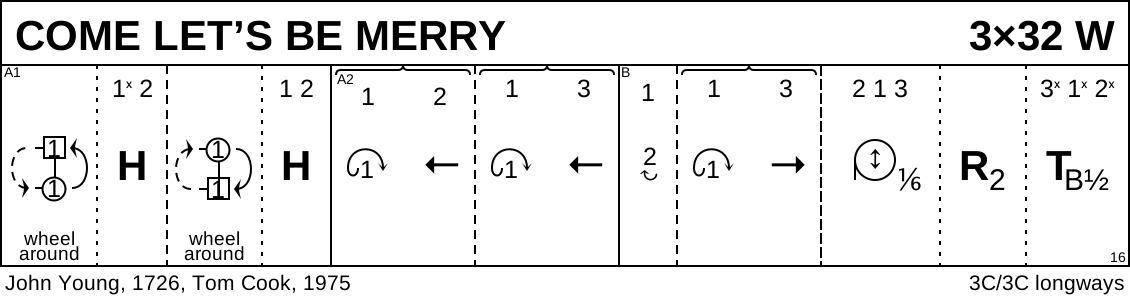
| Bare Necessities | 3 Couple Longways permutation: 312 |
| Number of dances | Number of versions | Number with music |
|---|---|---|
| 1 | 1 | 1 |
Warning: The figures for each dance is generated programmatically by regular expression matching and may be in error. Also, for old dances, they reflect the figures used by the interpreter which may not match those of the deviser.
Waltz
Bars: 8,16.
The Regency Dance Site has a good paper on the history of the waltz in England and how it interacted with Country Dance.
Starting in the 1790 you started seeing dances set to waltz music (and which contained "waltz" in their names, like The New German Waltz published by Longman & Broderip in 1796). But people did not waltz in these dances.
According to the Regency Dance's paper, the first country dance to describe a ballroom position hold and waltzing within the dance was William Campbell's The Russian Ambassador Waltz from ~1807.
Elias Howe published 12 country dances which contain waltzing as one of their figures in The American Dancing Master, 1862.
See Also
This website is copyright © 2021-2026 by George W. Williams V My work is licensed under a Creative Commons Attribution 4.0 International License. Most of the dances have more restrictive licensing, see my notes on copyright, the individual dance pages should mention when some rights are waived.