

Table of Contents
0-9
| Dance Title | Type | Deviser (or Editor/Publisher), Date, Interpreter | Music Performers | Formation |
|---|---|---|---|---|
| 26 Years in 32 Bars |  | Rachel McDonald 2026
|  | Triple Minor |
A
| Dance Title | Type | Deviser (or Editor/Publisher), Date, Interpreter | Music Performers | Formation | ||||||||||
|---|---|---|---|---|---|---|---|---|---|---|---|---|---|---|
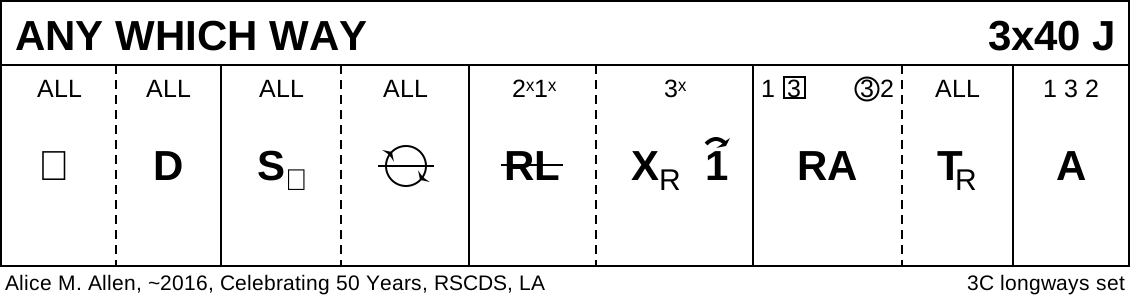
Any Which Way
| ||||||||||||||

B
| Dance Title | Type | Deviser (or Editor/Publisher), Date, Interpreter | Music Performers | Formation |
|---|---|---|---|---|
| The Bees of Maggieknockater | | John Drewry 1977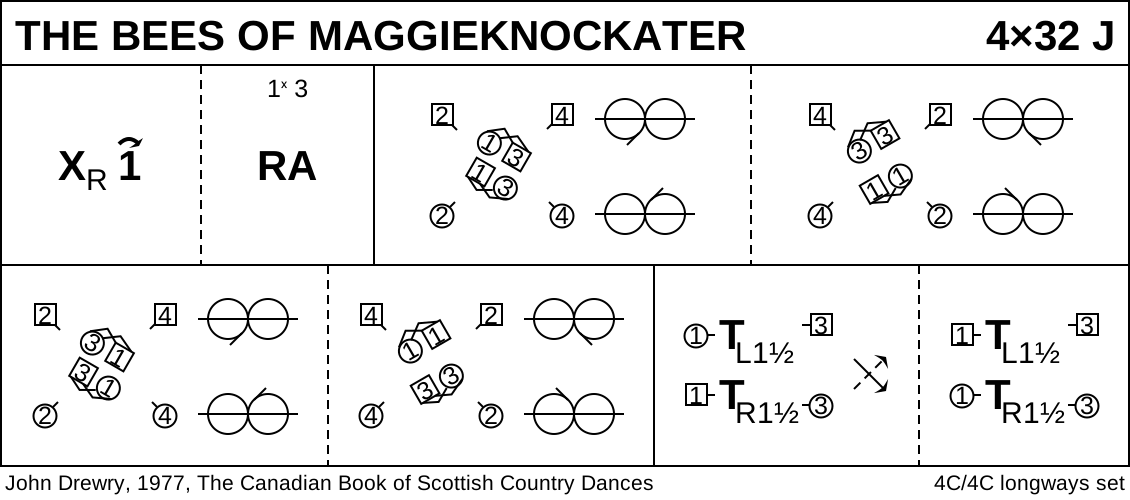
| Colin Hume | 4 Couple Longways permutation: 2341 |
| Ben the Sailor |  | George McFarren 1808 Regency Dances 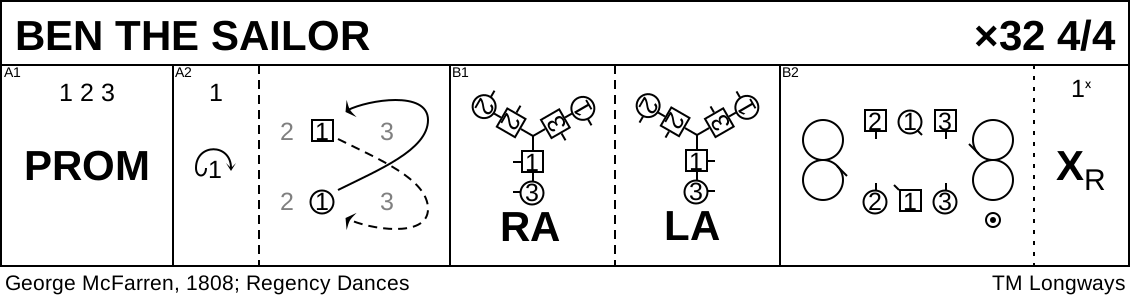
| | Triple Minor |
C
| Dance Title | Type | Deviser (or Editor/Publisher), Date, Interpreter | Music Performers | Formation |
|---|---|---|---|---|
| Catalina Express | | Doris Fisher ~2016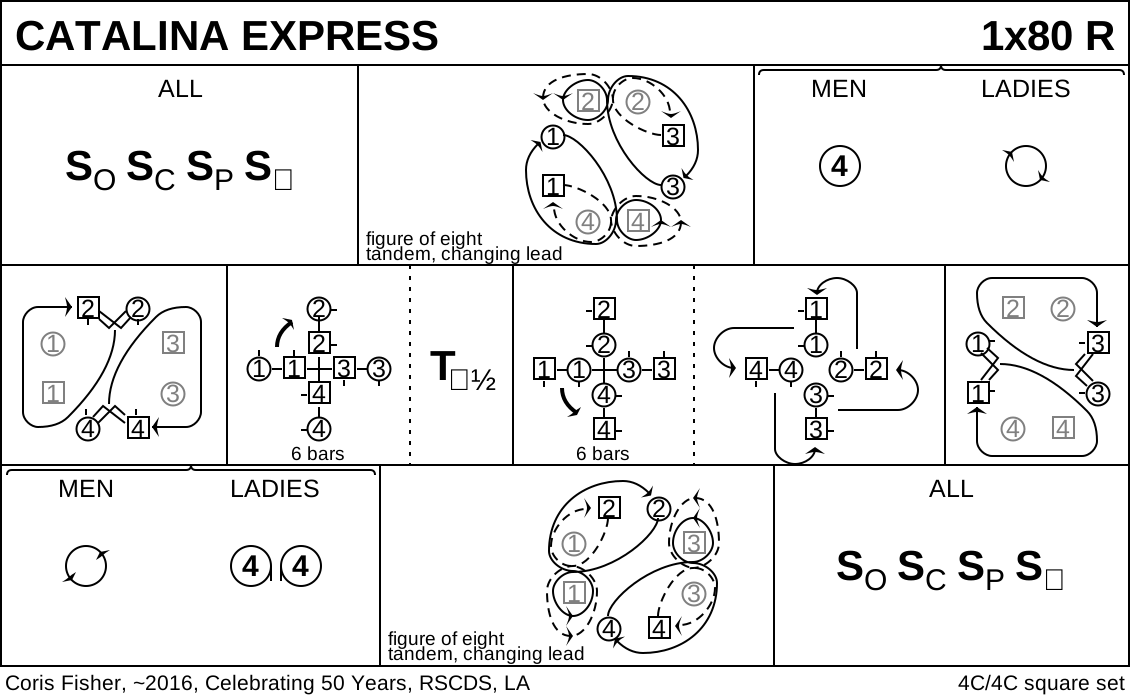
| | Square |
| Chuck's Strathspey | | Frank Wu 2013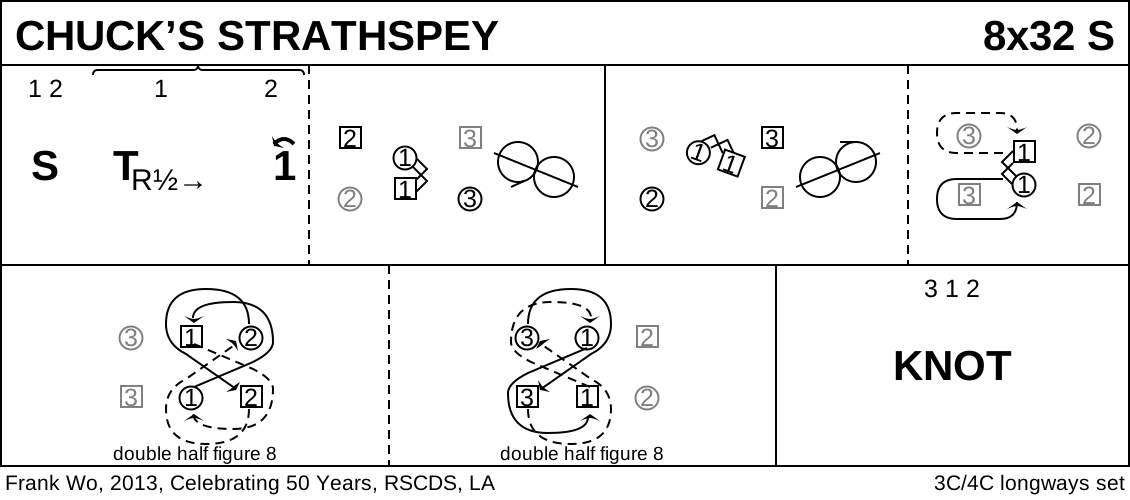
| | Triple Minor |
F
| Dance Title | Type | Deviser (or Editor/Publisher), Date, Interpreter | Music Performers | Formation |
|---|---|---|---|---|
| Farewell to Auchterarder | | Bill Hamilton 1967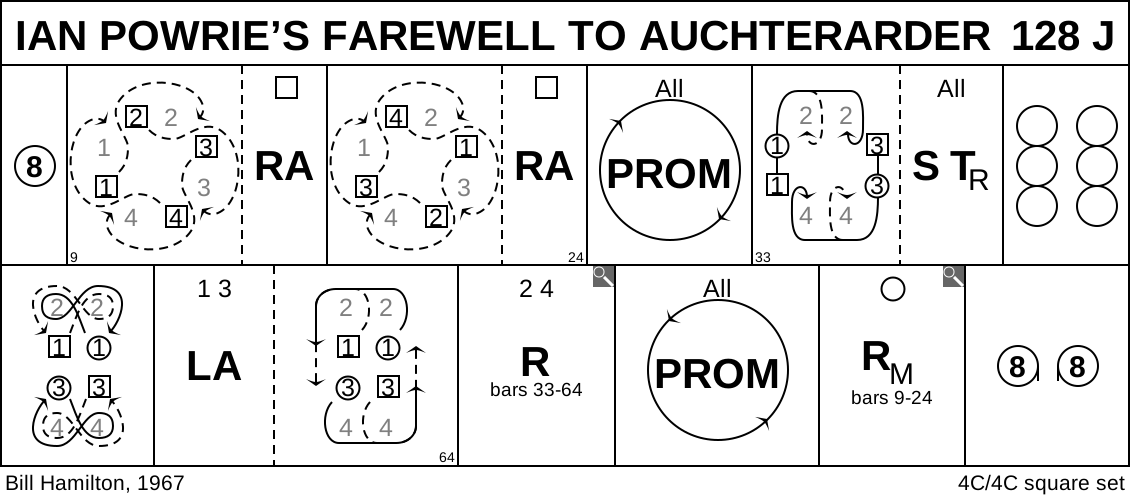
| | Square |
| The Four Branches | | Bill Hartung ~2016
| | 4 Couple Longways permutation: 2341 |
I
| Dance Title | Type | Deviser (or Editor/Publisher), Date, Interpreter | Music Performers | Formation |
|---|---|---|---|---|
| Ian Powrie's Farewell to Auchterarder | | Bill Hamilton 1967
| | Square |
L
| Dance Title | Type | Deviser (or Editor/Publisher), Date, Interpreter | Music Performers | Formation |
|---|---|---|---|---|
| The Library of Birmingham | | Kenneth J Reid 2015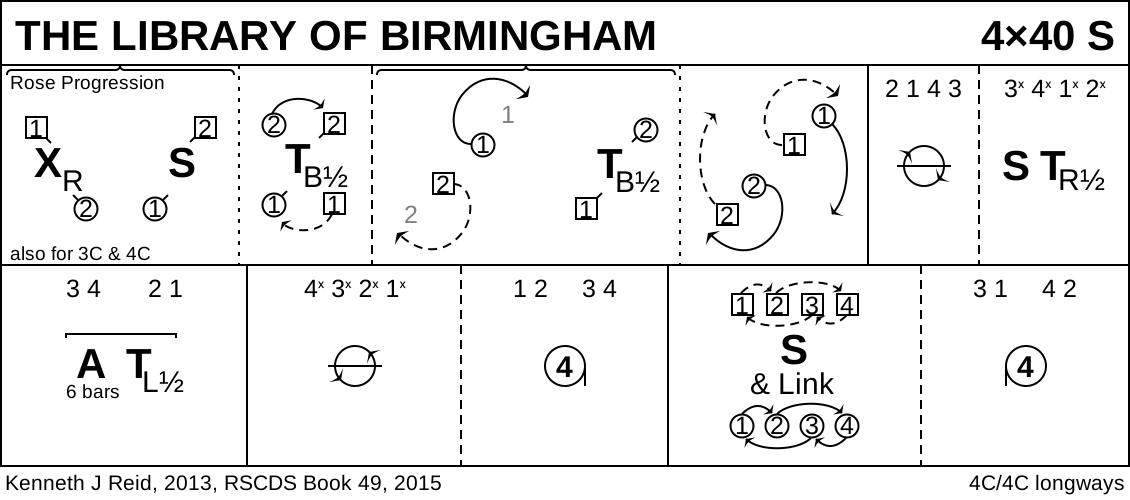
| | 4 Couple Longways permutation: 3142 |
P
| Dance Title | Type | Deviser (or Editor/Publisher), Date, Interpreter | Music Performers | Formation |
|---|---|---|---|---|
| Le Palindrome | | Anonymous ~2022
| | Circle as many as will |
S
| Dance Title | Type | Deviser (or Editor/Publisher), Date, Interpreter | Music Performers | Formation |
|---|---|---|---|---|
| Santa Monica Rag | | Los Angeles Branch Demonstraion Team ~2016
| | 4 Couple Longways permutation: 2413 |
T
| Dance Title | Type | Deviser (or Editor/Publisher), Date, Interpreter | Music Performers | Formation |
|---|---|---|---|---|
| Tuolumne Tournée | | Shirley Saturensky 1994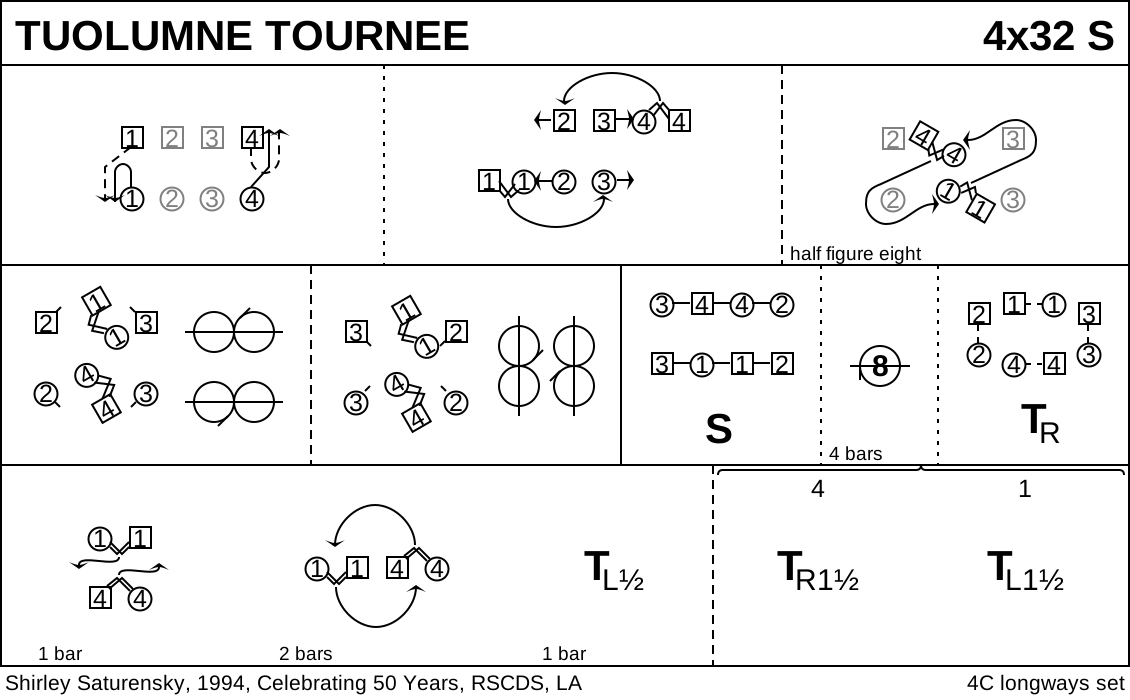
| | 4 Couple Longways permutation: 2413 |
| Number of dances | Number of versions | Number with music |
|---|---|---|
| 12 | 13 | 1 |
Warning: The figures for each dance is generated programmatically by regular expression matching and may be in error. Also, for old dances, they reflect the figures used by the interpreter which may not match those of the deviser.
Three Couple Promenade Round
Bars: 8.
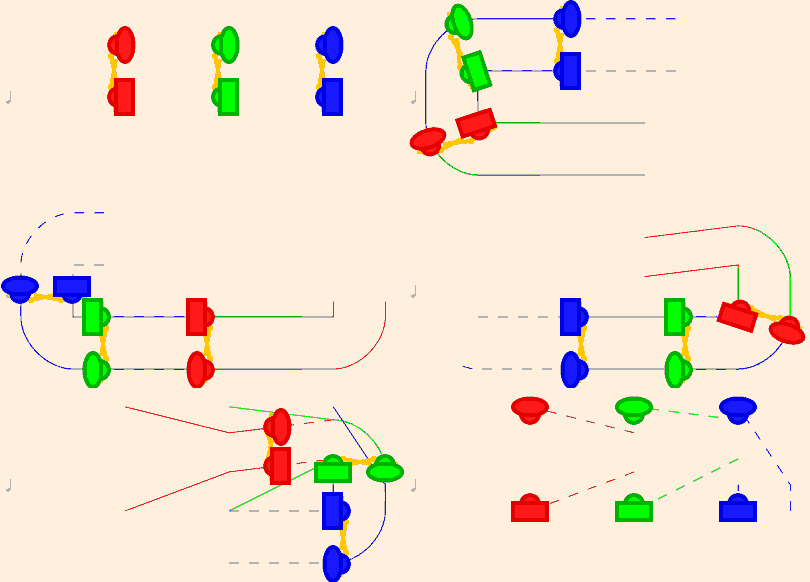 In Scottish Country dance the dancers start the figure in the center of the set, in promenade hold with partner, facing up. While in English dance you tend to start from the sidelines and quickly move into that position. Dancers move up, pivot round to face the men's line, move across, pivot to face down, move down to the bottom, pivot to face the women's line, move into the center, pivot to face up, and dance up to original places, and retire to the sidelines.
Variants
The (R)SCDS introduced both two and four couple longways promenades in Book 18. Leith Country Dance, and Longwise Eightsome Reel.
History
Sharp uses a three couple promenade in his interpretation of Adson's Saraband, Playford, 1651. But I'm not sure he is right to do so. Playford says:
First cu. lead down between the rest, come with a compass to your places, the rest following
Which sounds rather different to me.
The concept of "promenading" came over from France with Cotillions.
Thomas Hurst, in his The Cotillons Made PLAIN and EASY, 1769, (page 9), defines promenading:
TWELFTH CHANGE, The Promenade, or Walk.Every Gentleman takes his Partner by the Left-Hand; and putting his Right-Hand round her Waist; in this Manner they follow each other all round in a great Ring, and finish in their proper Places.
Note, this is not the modern skaters' hold promenade
I think Wilson may be the first to suggest joining hands in front, in his The Quadrille and Cotillion Panorama:
6.—PROMENADE, THE GREATAll the four couples cross hands with their partners, and move round in a circle to places.
But these are all in a square set. The first examples (that I can find) in a longways set occurred in 1776, and both Thompson and Skillern published dances which used this figure.
In the US, Saltator, 1802, specifies a three couple promenade in his dance College Hornpipe: each promenade their own partners round. While Howe, 1862, uses a 2 couple promenade in Whipple's Hornpipe.
In (R)SCDS Book 11, both the source descriptions of Glasgow Flourish (one by Anderson, and one by Wallace) contain three couple promenades, but the (R)SCDS replaced it with a lead down and up. However the next time the figure occurred (in Fidget, Book 16) it is translated unchanged.
This website is copyright © 2021-2026 by George W. Williams V My work is licensed under a Creative Commons Attribution 4.0 International License. Most of the dances have more restrictive licensing, see my notes on copyright, the individual dance pages should mention when some rights are waived.